My Honest John Schneider Assessment After 4 Years
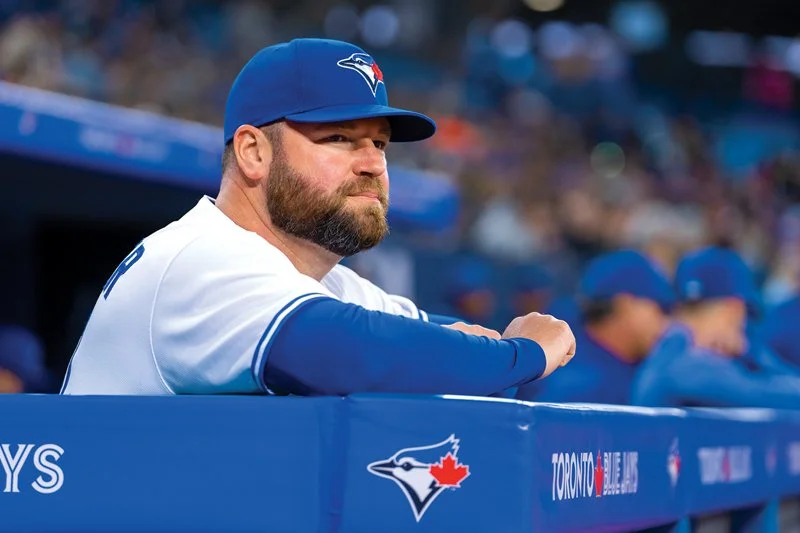
There are two versions of John Schneider in the public imagination.
There’s Schneider the steady hand, the former minor-league catcher who grew up in the Blue Jays system, earned the trust of his clubhouse, and helped guide Toronto through one of its most competitive eras in decades.
And there’s Schneider the lightning rod, the manager whose bullpen decisions get dissected in real time, whose October track record raises uncomfortable questions, and whose calm demeanour is sometimes interpreted as passivity instead of poise.
Four years in, the truth sits somewhere between those two versions and it deserves a more honest, less emotional evaluation than the day-to-day cycle of wins, losses, and Twitter verdicts.
The Context That Matters
Schneider didn’t inherit a rebuilding team, he inherited a roster built to win now with a core featuring Vladimir Guerrero Jr., Bo Bichette, a high-end rotation, and an ownership group that clearly expected postseason relevance and not just playoff appearances.
This is important because managers aren’t judged in a vacuum, they’re judged by what their teams are supposed to be and, for Toronto, the expectation since 2022 has been simple: this is a contender.
Where Schneider Has Quietly Succeeded
1. Clubhouse Stability in a High-Pressure Market
Toronto is not an easy place to manage, it’s a national team in a country that treats baseball like a regional sport until October arrives and then suddenly cares very loudly.
Schneider has been a stabilizing presence through:
A managerial transition midseason (2022)
Multiple playoff disappointments
Roster turnover
High-profile contract uncertainty around core players
By most player accounts, the room has remained unified which is not a small thing. Teams fracture when pressure builds and the Jays, for all their frustrations, haven’t turned inward publicly or privately in a way that suggests a loss of leadership at the top.
2. Embracing the Analytical Era (Without Losing the Players)
One of Schneider’s real strengths is that he sits comfortably between the front office and the field.
He’s not an old-school “gut-only” manager, he’s also not a tablet-first automaton. He’s been willing to use matchup data, bullpen leverage models, and defensive positioning systems while still maintaining credibility with veteran players who want to feel trusted, not managed by spreadsheet. It does appear that he still has some lessons to learn here but there is a lot of growth from the beginning evident to us all. .
That balance is harder than it looks and a lot of managers lose one side of it.
3. Regular-Season Consistency
Under Schneider, the Blue Jays have been a reliable playoff-caliber team. They’re definitely not a juggernaut yet but a consistent winner in a brutal division to be sure.
This is key because sustained competitiveness in the AL East is not easy, and the Jays haven’t fallen into the “great on paper, disappointing in reality” trap that swallows a lot of talented rosters (looking at you New York).
Where the Criticism Is Earned
1. The October Problem
This is the part you can’t dance around.
The Blue Jays under Schneider haven’t just lost in the postseason, they’ve often looked tight in it. Last years’ great run notwithstanding, he has proven to be conservative, reactive, and scared at times. They sometimes seem like a team trying not to make mistakes instead of trying to win.
The most infamous moments in the last couple of years include pulling José Berríos early in the 2023 Wild Card series, and the decision to go to Brandon Little in Seattle in 2025. This kind of decision making has become symbolic of a larger critique: trusting the process over the moment.
Were these decisions analytically defensible? Yes. Did they both feel like they drained the life out of the game? Also yes.
Great postseason managers have a feel for when the model needs to bend and Schneider, so far, has leaned heavily on the model.
That doesn’t make him wrong but it does make him predictable, and in October, predictability is dangerous.
2. Bullpen Management Under Pressure
Over four seasons, one recurring theme has been a tendency to over-script late innings.
There’s often a sense that the game is being managed in advance (seventh inning belongs to this guy, eighth to that guy, ninth to the closer) even when the game flow suggests a more flexible, high-leverage approach. We saw this in the World Series when Hoffman was brought in late instead of facing the key parts of the order.
The elite managers treat leverage as a living thing, not a schedule, and Schneider, at times, treats it like a plan that shouldn’t be disrupted.
This is where the criticism becomes less about philosophy and more about adaptability.
3. Offensive Identity Drift
The Blue Jays have had seasons where their talent and their results didn’t fully line up.
At times, the offense has looked caught between two identities:
A power-first lineup
A contact-and-pressure lineup
That kind of philosophical limbo usually reflects organizational alignment, and not just the manager, but the manager is the one who sets daily tone through lineup construction, situational emphasis, and in-game aggressiveness.
Schneider hasn’t always imposed a clear offensive personality on the team and the Jays have often felt like a group of great hitters rather than a great hitting team. I will indicate that this past year seems to have shown a much more clear identity under the leadership of the great David Popkins in his first year as the new hitting coach.
The Fair Way to Frame His Success
Here’s the part that gets lost in the criticism: John Schneider is a good manager.
We know this because bad managers lose the room, fight the front office, and create chaos.
Schneider does none of those things.
What he is, at least so far, is a very good regular-season manager who is still trying to become a great postseason one.
That’s not a dismissal but it is a distinction between the tiers of managers that exist.
There’s a tier of managers who can guide talent through 162 games, and then there’s a smaller tier who can navigate three games, five games, seven games, and the emotional weight that comes with each pitch feeling like a referendum on your philosophy.
Schneider hasn’t crossed that line yet, but he hasn’t fallen off the path either.
The Developmental Question
One of the more interesting undercurrents of Schneider’s tenure is how little credit, or blame, he gets for player development.
Toronto’s system has produced useful players and contributors, but it hasn’t yet become a true talent pipeline on the level of Tampa Bay, Cleveland, or Atlanta.
That’s not a manager-only issue, but in a modern MLB structure, the manager is often the bridge between development theory and major-league reality.
The next phase of Schneider’s legacy may be less about wins and losses and more about how seamlessly young players transition into meaningful roles on a contending team which is a harder test than managing veterans.
So What Is John Schneider, Really?
Four years in, he looks like this:
A strong leader of people
A trusted partner to the front office
A stabilizing force in a volatile market
A tactician still searching for his October voice
He’s not overmatched, but he’s also not yet elite.
If the Blue Jays win a few more postseason series under John Schneider, the narrative around him will change. But last year was a bit break even with the decision question marks in Seattle and the World Series. The same decisions that now get framed as conservative will suddenly get called “measured” if they lead to consistent playoff success and the same calm demeanour will become “poise.”
That’s how thin the line is at this level.
Right now, Schneider exists in baseball’s hardest space: good enough to keep, not yet undeniable enough to stop questioning. Talk to Sean McDermott of the Buffalo Bills for reference…
In a market that believes its window is open, not opening, that’s both a compliment and a challenge because the next two seasons won’t define whether John Schneider can manage a baseball team they’ll define whether he can manage moments.
Sources
https://www.mlb.com/bluejays
https://www.baseball-reference.com/teams/TOR/
https://www.fangraphs.com/teams/blue-jays
https://www.sportsnet.ca/mlb/
https://www.tsn.ca/mlb
https://theathletic.com/mlb/toronto-blue-jays/
https://www.espn.com/mlb/team/_/name/tor/toronto-blue-jays
https://www.mlb.com/news/john-schneider-blue-jays-manager
https://www.baseball-reference.com/managers/schnejo01.shtml