David Popkins and the Art of Reinvention
How one hitting coach quietly changed the Blue Jays’ destiny.
How one hitting coach quietly changed the Blue Jays’ destiny.
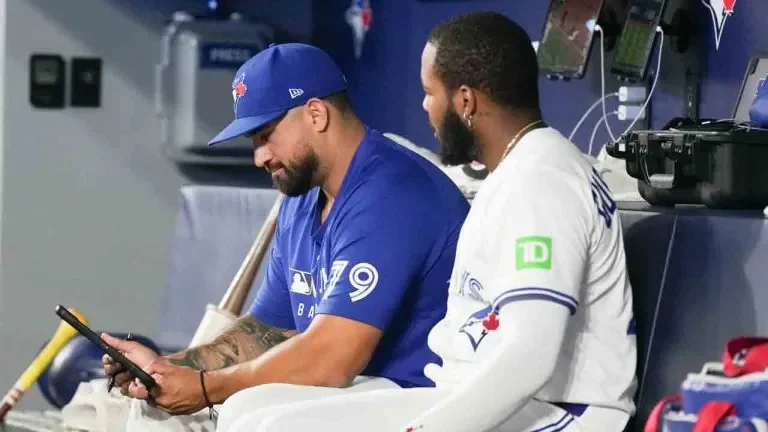
When a baseball team turns the corner, we tend to remember the fireworks, the clutch home runs, the marquee trades, the champagne-drenched locker room speeches.
What we forget, almost always, is the person behind the curtain. The one who changes how a team thinks before it ever changes what a team does.
In the case of the 2025 Toronto Blue Jays, that person is not a superstar athlete or a blockbuster executive.
A former undrafted outfielder with no major-league resumé to speak of, a calm California observer in a league often run by ego and theatrics, Popkins arrived in Toronto with little fanfare but with a philosophy, a voice, and a vision that ultimately reshaped the DNA of a franchise.
And here’s the truth: a little under year ago, I wrote that hiring David Popkins was arguably the best move the Blue Jays made that offseason. Not because I wanted to be bold, or because I like being contrarian, but because I saw something rare: a hitting coach whose ideas were as modern as they were human, and whose track record (beneath the surface) hinted at a revolution waiting to happen.
But even I didn’t anticipate this.
Part I: The Unlikely Architect
Popkins’ story begins in a place baseball rarely romanticizes, the margins when he was born in Woodland Hills, California, and played at UC Davis, a school known far more for its academics than its professional baseball pipeline. He was an All-Big West standout, twice. He hit for average, for power and, more importantly, he learned how to think.
Because even in college, Popkins was already a student of the swing. Not his swing…the swing. The biomechanics, the reaction time, the psychology of timing when swinging a piece of ash.
When he went undrafted, he didn’t spiral, instead he studied. When he bounced around the Cardinals system and later independent ball, he didn’t complain, he analyzed. He turned setbacks into data points and any frustration into methodology.
By the time he transitioned into coaching in 2021 with the Minnesota Twins, Popkins had developed a reputation that traveled faster than his name: He could see things in hitters that most coaches couldn’t.
A subtle weight shift. A tension spike in the back elbow. A mental lapse disguised as an “approach change.”
He didn’t teach hitters to swing, he taught hitters to understand themselves.
That distinction matters.
Part II: The Revolution Begins Quietly
When the Blue Jays hired Popkins in October 2024, it didn’t dominate headlines as Toronto had bigger talking points: rotation questions, free agent decisions, the annual “Is Vlad entering a contract year breakout?” speculation.
But Popkins showed up to spring training with a binder full of individualized plans… not one for the team, but one for every single hitter.
He didn’t ask players to conform to him but instead decided that he was going to bend his philosophy to them.
That is relatively unheard of in pro sports, much less for a MLB hitting coach.
“He doesn’t try to make 26 guys hit like him,” one Jays player later said privately. “He tries to make 26 guys hit like the best version of themselves.”
Popkins’ method was rooted in three core ideas:
1. Creativity is not a buzzword, it’s a weapon.
He told hitters that a lineup built on one strength is predictable, and predictable is beatable but a lineup built on creativity (bunts, hit-and-runs, gap shots, power, patience, chaos) forces pitchers to pitch with anxiety.
2. The count is your compass.
Popkins believed plate discipline wasn’t a result but a philosophy. The Jays improved dramatically in pitches seen per plate appearance, first-pitch swing decisions, and late-count adjustments.
3. The mind hits before the bat does.
Popkins’s psychology background from UC Davis was not trivia, it was central to the approach he was going to bring to his players by applying various breathing routines, visual cues, pattern recognition, and mindset through failure reframing.
He taught hitters how to stay in the moment, not in their heads.
Part III: The Results Were More Than Numbers, They Were Identity
Toronto didn’t just start hitting better, they started behaving differently.
Yes, they jumped from the middle of the pack to top-five in nearly every major offensive category (runs, OPS, wRC+, hard-hit percentage, and two-strike battle rate)
Yes, their strikeout-to-walk ratio improved in a way that made analysts ask: “Where did this discipline come from?”
But that wasn’t the whole story.
The Blue Jays became a different kind of threat.
Instead of swinging for three-run homers and hoping, they battled, they adjusted, they tortured pitchers.
Instead of looking tight in big moments, which has been an issue that plagued them in previous seasons, they looked loose, calm, and always dangerous.
The offense didn’t just improve, it grew serious teeth.
This was not a coincidence.
This was Popkins.
Part IV: The World Series Run with Popkins’ Fingerprints Everywhere
When Toronto made its run, analysts pointed to the rotation, to the bullpen, to team defense. All true. All important.
But the offense changed games with clutch hits, extended innings, relentless at-bats, and hitters refusing to give away outs.
Toronto no longer wilted under pressure, but it actually made them sharper.
The league noticed. Former players noticed. Scouts noticed.
Jays legend Jesse Barfield said it best:
“David Popkins is one of the best hires the Blue Jays have ever made.”
This time, hindsight doesn’t humble, it confirms.
Part V: So Yes…I Called It. But the Real Story Is Bigger.
When I wrote that Popkins was the best hire of the offseason, the intent wasn’t prophecy. It was intuition that Toronto needed a hitting coach who understood both the science and the soul of the game.
Turns out, that’s exactly what they got.
Popkins didn’t come to Toronto to tweak swings. He came to Toronto to change mindsets.
And he didn’t give the Jays a new hitting philosophy, he gave them an offensive identity.
The Jays aren’t just better hitters now.
They’re smarter hitters, tougher hitters, and more clutch hitters.
They’re a modern team built on an old truth:
Baseball belongs to the minds willing to think differently.
David Popkins thinks differently, and the Toronto Blue Jays are reaping the rewards.