How the Dodgers, Blue Jays, Mariners, and Brewers built contention the same way and what it means for baseball's future
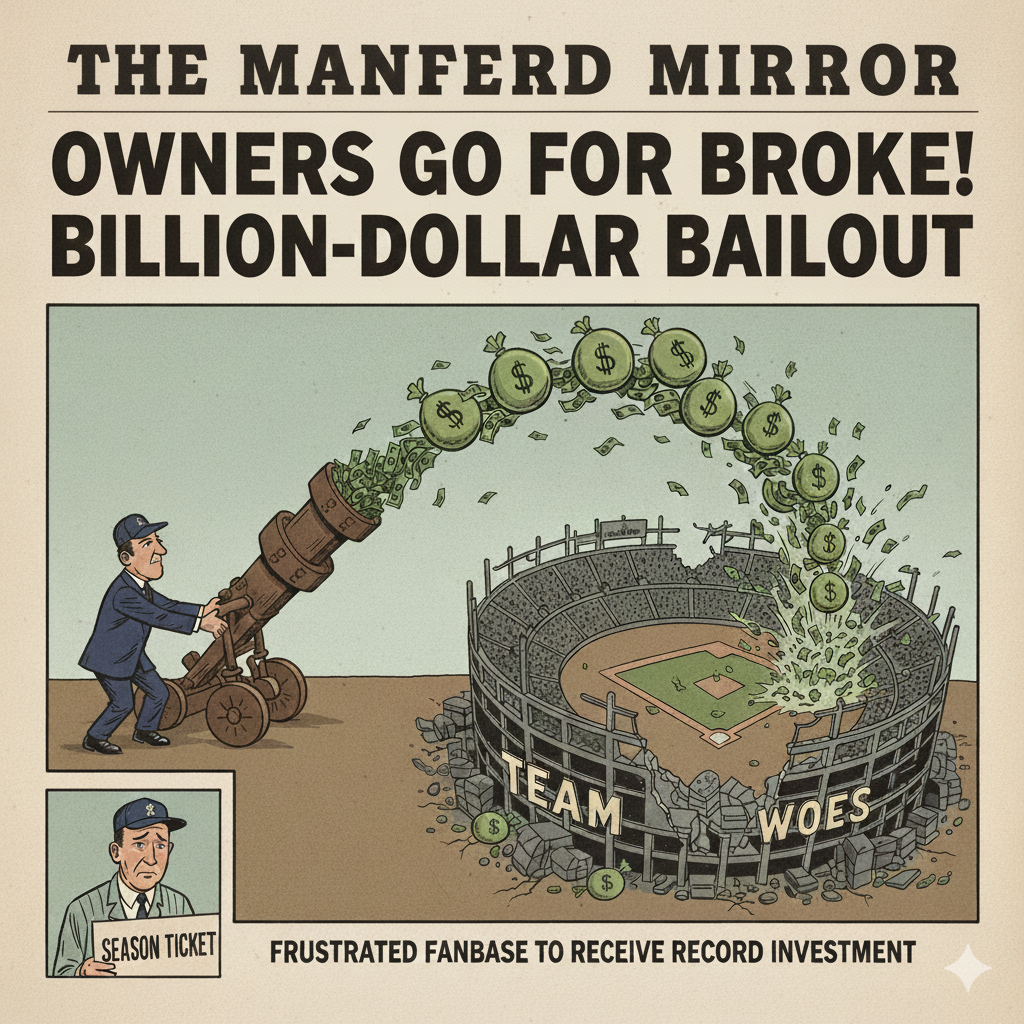
It has become almost fashionable for fanbases to imagine their teams as philosophical opposites with the Dodgers as big-market behemoths who bludgeon the league with payroll, the Blue Jays as opportunistic tinkerers who trade and spend in cycles, the Mariners as the draft-and-develop purists fighting gravity, and the Brewers as the low-market economists squeezing value from the margins.
But strip away the tone, branding, and mythology, and a different picture emerges. These four clubs (the ones that survived the gauntlet of 2025) have more in common in roster construction than their fan identities would ever admit. Their uniforms differ, their slogans differ, but the machinery underneath is startlingly similar.
The truth is that modern baseball’s elite no longer resemble the romantic archetypes of dynasties past. There is no “homegrown core” in the traditional sense, and no team (no matter how loudly their marketing pretends otherwise) survives without high-volume external acquisition.
The Dodgers may be the most shameless version of this power-model, but the Jays, Mariners, and Brewers follow the same architectural logic: identify what you cannot develop, buy aggressively, and use development only in the places where it is cheapest and most predictable.
Every one of these teams has learned the same lesson: pitchers are worth building, hitters are worth buying, and flexibility is worth more than pipeline purity.
Consider the supposed outlier: the Seattle Mariners, heralded for their farm system and forward-leaning pitching labs. It’s true that Seattle develops arms with a clarity bordering on evangelism. But even they must turn to the market for the offense required to survive an American League that now weaponizes lineup depth the way football teams weaponize tempo. Julio Rodríguez is the glorious exception, not the rule. Their competitive identity of top-five pitching wrapped around league-average hitting was engineered not by an army of homegrown bats but by a mosaic of trades, supplementary free-agent signings, and opportunistic acquisitions of undervalued role-players. Development is the scaffolding but the structure is purchased.
Toronto fits the pattern almost perfectly.
For all the noise about “building from within,” the Blue Jays have spent the last half-decade constructing a contender through a rotating carousel of high-leverage trades, free-agent pitching purchases, and targeted overhauls. The 2025 roster (the one that came within inches of rewriting franchise history) was more externally assembled than at any point since the early 1990s.
The rotation? Bought or traded for ith the exception of the second coming Trey Yesavage. The lineup? A web of acquisitions. The bullpen? Reinforced annually through opportunistic expenditures. Even their “homegrown” narrative pieces (Bichette and Guerrero) are more the exception than the organizational rule.
The Jays have accepted what the Dodgers learned years earlier: the draft is too slow, the development curve too volatile, and the competitive window too narrow to rely on romantic ideals. The modern game rewards interventionist front offices, not patient ones.
And then there is Milwaukee.
The smallest market in this quartet and the clearest counterargument to the myth that “homegrown” is synonymous with “virtuous.” No front office in baseball manipulates the margins with greater precision than the Brewers. Yet even Milwaukee, despite their aesthetic commitment to frugality, behaves like a team fully aware of the sport’s evolution. They will develop pitchers because they must, and they will elevate specific bats within their system. However, when the moment requires it, they do exactly what the Jays and Dodgers do: they transact. They acquire. They modernize through external correction. Corbin Burnes, Brandon Woodruff, Devin Williams: these successes create the illusion of a spotless internal pipeline, yet the Brewers’ actual competitive core is a stitched blend of targeted acquisitions, economic maneuvering, and strategic opportunism. Development is not the mission; sustainability is.
That leaves the Dodgers as baseball’s most caricatured superpower and the easiest target for outsiders who want to believe that Los Angeles buys rather than builds. But a closer look reveals something far more nuanced.
Yes, the Dodgers buy stars because they can and they sign luxuries because they are available. But the foundational consistency of the organization derives from their uncanny ability to blend this spending with a conveyor belt of internally calibrated pitching talent. Their system is not a farm; it is an R&D department. Bobby Miller, Dustin May, Gavin Stone are not traditional “homegrown stars” in the nostalgic sense. They are products of an industrial process, refined through a development model that prizes predictability, optimization, and biomechanical precision. The Dodgers do not develop players; they manufacture certainty. Everything else such as Betts, Ohtani, Freeman, Glasnow, are layered on top of a machine built to remain elite regardless of economic cycles.
The myth separating these teams collapses under scrutiny. The Dodgers are not the Evil Empire, nor are the Jays the plucky stepchild, nor the Mariners the purists, nor the Brewers the scrappy moralists. They are all, in their own dialects, speaking the same structural language:
Pitching is developed.
Hitting is acquired.
Depth is diversified.
Windows are managed.
Contention is manufactured.
The variance between them is not philosophical but financial; not ideological but proportional. What changes is only the degree of reliance on external markets but not the underlying commitment to the market itself.
So when fans debate which team “builds the right way,” they are unknowingly arguing over accents of the same conversation. The competitive landscape has already shifted.
The old binaries (homegrown vs acquired, developed vs bought) no longer define how the strongest clubs operate. The four teams that reached the summit of baseball last year survived and thrived because they abandoned those binaries altogether.
They embraced a truth the rest of the league must eventually face: In modern baseball, there is no right way to build a team, there is only the way that works. And the teams that understand this (not the ones clinging to tradition or narrative) are the ones still playing in October.
……..at least until the lockout.