Inside the Blue Jays’ Athletic Training Advantage
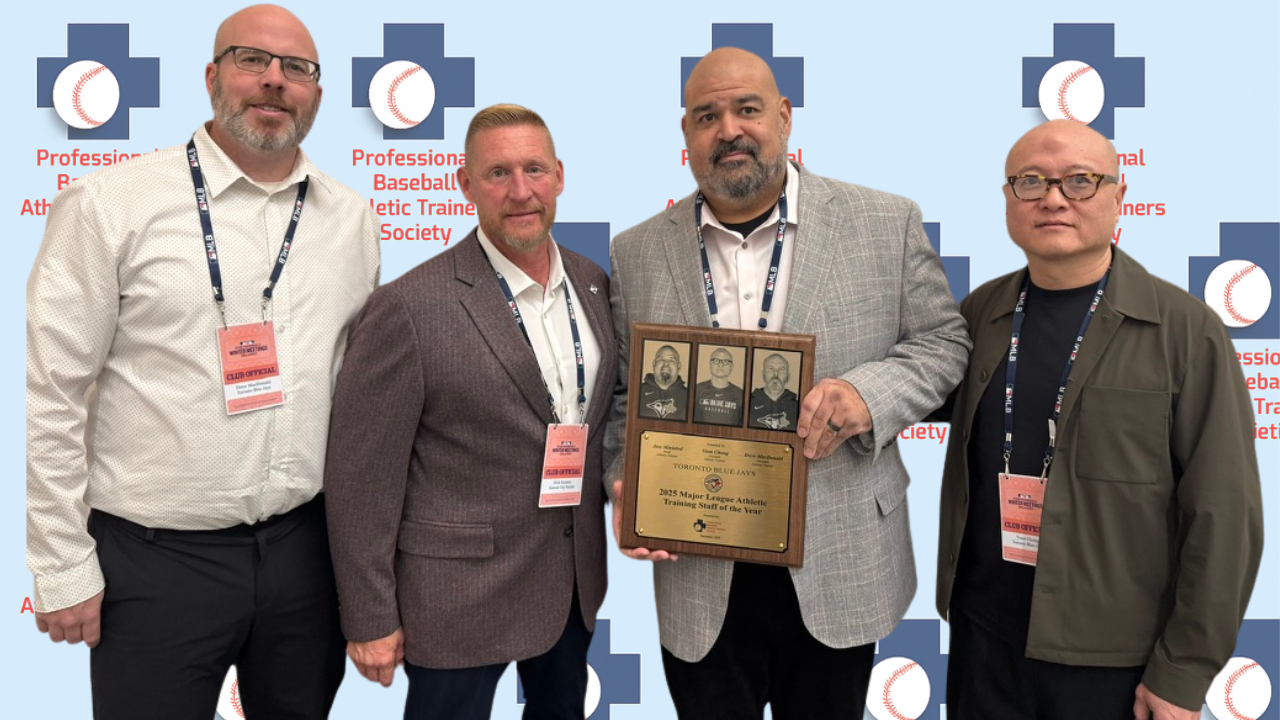
In baseball, success is usually credited to the obvious things like the ace who takes the ball every fifth day, the hitter who carries a lineup for a month, or the general manager who “won the deadline.”
But if you spend enough time around winning organizations, you learn something uncomfortable: the real advantage is often hidden in rooms fans never see, led by people whose names are rarely said on television.
The Toronto Blue Jays have a few rooms like this, but the room of choice today is the athletic training and performance department.
And it might be one of the most important reasons this team has been able to build a high level of competitiveness in an era where injuries are swallowing seasons whole across all sports.
Why Athletic Training is no longer a support role, it’s a strategy
Over the last decade the MLB has changed faster than most fans realize with pitchers throwing harder and hitters swinging faster. On top of that, travel is heavier and the recovery windows are shorter which means that the margin between “available” and “injured” is thinner than ever.
The result is that teams that treat athletic training as a reactive medical function fall behind and teams that treat it as organizational infrastructure gain an edge.
Toronto has chosen the second path.
The Blue Jays were named MLB Athletic Training Staff of the Year, a recognition voted on by peers across the league. That’s not a popularity award. It’s a professional acknowledgment that says: this group keeps players on the field better than most.
Meet the Core: The Major League Staff
Jose Ministral-Head Athletic Trainer
Ministral’s background includes time with the Pirates organization after completing his schooling at Springfield College and he can be considered a “home grown asset” based on his 12 years with the organizations.
In collaboration with Major League Director of Health and Performance Andrew Pipkin, Ministral has helped shift the Jays toward:
proactive soft-tissue management
individualized recovery plans
injury-risk profiling tied to workload, not just pain response
In short, athlete support that leads to fewer surprises and fewer cascading injuries.
PS. More on Pipkin coming soon.
The Canadian Connection
Here’s something that often gets overlooked: Canada punches well above its weight in athletic therapy and sports medicine education.
Several members of the Blue Jays’ extended performance and rehab ecosystem have Canadian ties, either by nationality or education, including training through Canadian programs aligned with CATA (Canadian Athletic Therapists Association) standards. Voon Chong lives in Vancouver and attended Simon Fraser University, while also representing Canada as the trainer with some our national Soccer teams. Additionally, Drew Macdonald is from Ontario, lives in Ontario, and attended Sheridan College. More on him below.
Canadian athletic therapy programs are known for:
heavy hands-on clinical hours
integrated rehab + return-to-play models
conservative-but-smart load management philosophies
That mindset shows up in Toronto’s system.
You see it in how:
pitchers return without velocity cliffs
position players ramp back gradually
soft-tissue re-injury rates remain relatively low
This isn’t coincidence. It’s philosophy.
Spotlight on Drew Macdonald and Sheridan College
Drew Macdonald with John Schneider and George Springer (Source: https://www.granthaven.com/post/paris-man-living-his-blue-jays-dream)
If you want to understand why the Toronto Blue Jays’ athletic training operation has become one of the most respected in baseball, you don’t start with flashy technology or cutting-edge buzzwords. You start with people like Drew MacDonald.
MacDonald, now 38, is entering his sixth season on the Major League staff as the club’s Second Assistant Athletic Trainer and his 15th season overall with the organization. That alone tells you something about how the Blue Jays think about continuity, institutional knowledge, and trust. Athletic training, after all, is not a field that rewards shortcuts, but instead it rewards consistency, credibility, and relationships built over years, not months.
A graduate of Sheridan College’s Athletic Therapy program, MacDonald represents a distinctly Canadian pipeline that the Blue Jays have quietly leaned into for years. Sheridan’s program is widely regarded as one of the strongest applied athletic therapy programs in the country, emphasizing hands-on clinical experience, injury prevention, and long-term athlete management over purely academic theory. That practical grounding shows up in MacDonald’s career path.
He first entered the Blue Jays ecosystem as an intern in 2008, a critical foot-in-the-door opportunity that exposed him early to professional baseball’s unique physical demands. Three years later, in 2011, he was hired full-time as the athletic trainer for Bluefield, the organization’s Appalachian League affiliate. From there, his path reads like a masterclass in organizational development.
MacDonald moved steadily through the system:
Vancouver (2012),
Lansing (2013–2017),
New Hampshire (2018)
Each stop representing a different level of athlete, a different injury profile, and a different leadership challenge so that, by the time he was promoted to Assistant Medical and Athletic Training Coordinator in 2019, he wasn’t just treating injuries but he was helping shape protocols, communication systems, and rehab philosophies across multiple affiliates.
That background matters as Major League athletic trainers don’t just tape ankles and ice shoulders; they translate between front offices, coaches, performance staff, and players. MacDonald’s long climb through the minors gave him fluency in all of it.
His reputation extends well beyond the organization. In 2023, MacDonald was selected as Head Athletic Trainer for Team Canada at the World Baseball Classic, a role that speaks volumes. National team assignments aren’t handed out lightly as they require trust at the highest level, not only in clinical skill but in judgment, communication, and the ability to manage elite athletes under intense, compressed competition schedules.
That selection also underscores something else: the Blue Jays’ athletic training success isn’t accidental. It’s deeply connected to Canadian development pathways through schools like Sheridan, professionals who grow up understanding hockey-style workload management, multi-sport stress, and long seasons, and trainers who think in terms of durability rather than short-term availability.
MacDonald is originally from Teeswater, Ontario, and now resides in Paris, Ontario, with his wife and their sons. It’s a detail that matters, not sentimentally but structurally. He’s part of a generation of Canadian sports medicine professionals who have stayed rooted while operating at the highest levels of professional sport. That perspective (balancing elite performance with long-term health) mirrors exactly how the Blue Jays have approached player availability in recent seasons.
In a sport where injuries can quietly derail seasons, Drew MacDonald’s career is a reminder that organizational success often hinges on people fans rarely see. His journey from Sheridan College to the World Baseball Classic, from Bluefield to the major leagues, captures what the Blue Jays have built behind the scenes.
The Minor League System: Where the Real Value Is Built
If the major league staff protects wins, the minor league athletic training staff protects futures.
Toronto has quietly invested in:
full-time athletic trainers at multiple affiliates
shared language between performance, medical, and development staff
rehab protocols that mirror MLB standards, not second-tier shortcuts
That matters because most injuries don’t happen in Toronto, they happen in Dunedin, in Buffalo, in New Hampshire, and in every other minor league system.
And when prospects lose development time, teams lose value.
Toronto has been better than most at preserving innings, games played, and developmental continuity, especially among pitchers.
That’s not luck. That’s infrastructure.
The Numbers That Matter
While injury data is imperfect across MLB, comparative trends are telling.
Over recent seasons:
Toronto has ranked better than league average in total games missed by position players
The Jays have avoided catastrophic pitching-staff wipeouts seen in several comparable contenders
Soft-tissue recurrence rates have been notably lower than some high-spend peers
This isn’t about having zero injuries, that’s impossible.
It’s about:
shorter IL stints
Coming back ready to PERFORM
fewer setbacks
better late-season availability
And availability, more than talent, wins divisions.
Why this all matters more than any one Free Agent signing
Here’s the uncomfortable truth: A $100 million player who misses 40% of the season is less valuable than a $20 million player who plays 155 games…and the athletic trainers who kept them out there.
Elite athletic training doesn’t show up in highlight reels, but it sure shows up in September standings.
When the Blue Jays talk about “sustainability,” this is part of what they mean.
It’s why:
veterans age more gracefully here
young pitchers aren’t rushed back
the team can plan windows, not just seasons
And it’s why being named Athletic Training Staff of the Year isn’t a footnote, but a signal.
The Blue Jays’ athletic training staff isn’t a background feature, but a part of the competitive identity of the franchise.
In a league where injuries are the great equalizer that flattens payroll advantages and erases depth, Toronto has built something quietly powerful in a system that keeps players available, functional, and trusted.
Sure, that doesn’t guarantee championships, but it gives you a chance (every year) to compete honestly in October and in modern baseball that might be the most underrated edge of all.